Writing

Essays, notes, and side paths from exploring how large language models reshape reverse engineering practice.
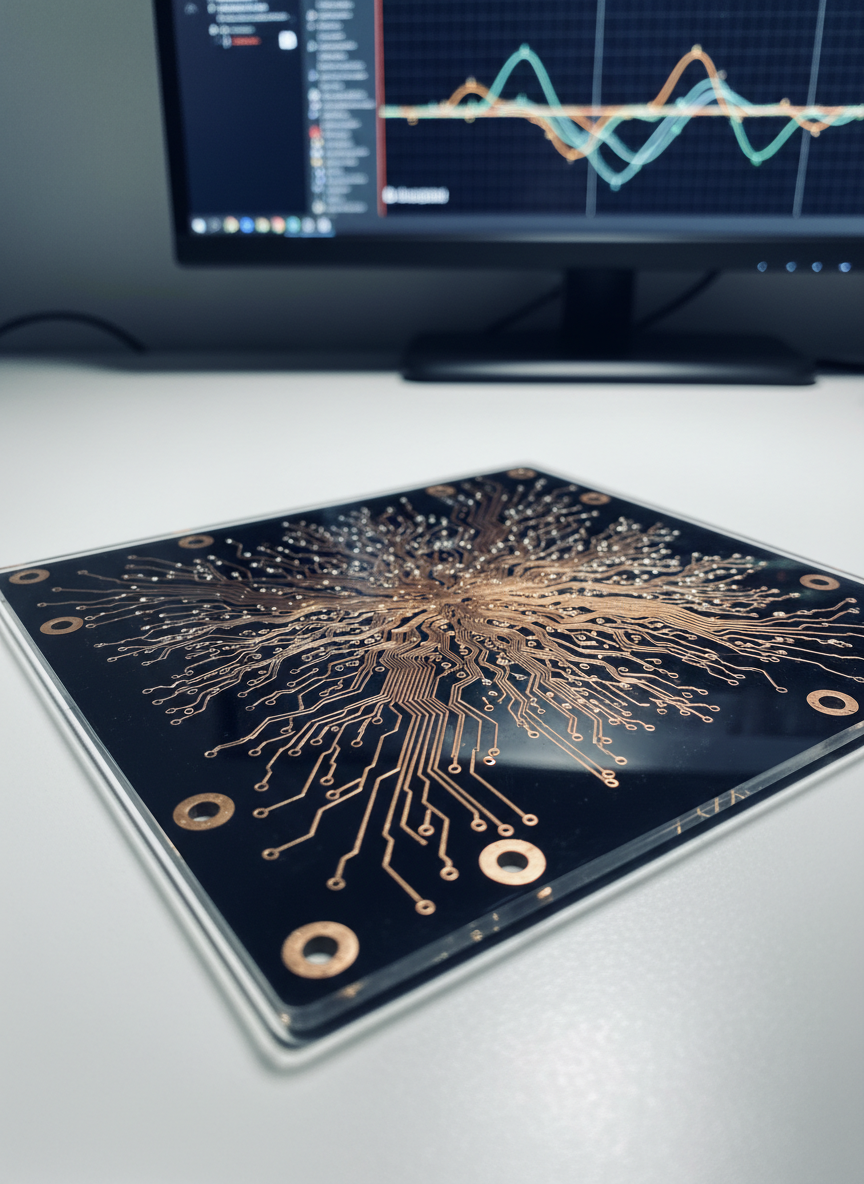
A close-up of a polished black PCB resting on a clean white desk, with a transparent acrylic overlay etched with abstract patterns hinting at neural network connections merging into traces and vias. In the background, slightly blurred, a monitor shows a high-level visualization of data flow analysis without any readable text. Cool, directional studio lighting from the left creates crisp highlights on the copper traces and subtle reflections in the acrylic. The mood is analytical and precise, with a modern, high-tech aesthetic. Photographic realism, captured from a slightly elevated macro angle, emphasizes fine textures and details, framing the board along the rule of thirds to suggest the meeting of hardware reverse engineering and LLM-powered insight.

Why this writing exists at all

This space collects careful experiments, failures, and pattern-finding around Vibe RE, written for engineers who prefer nuance over hype.
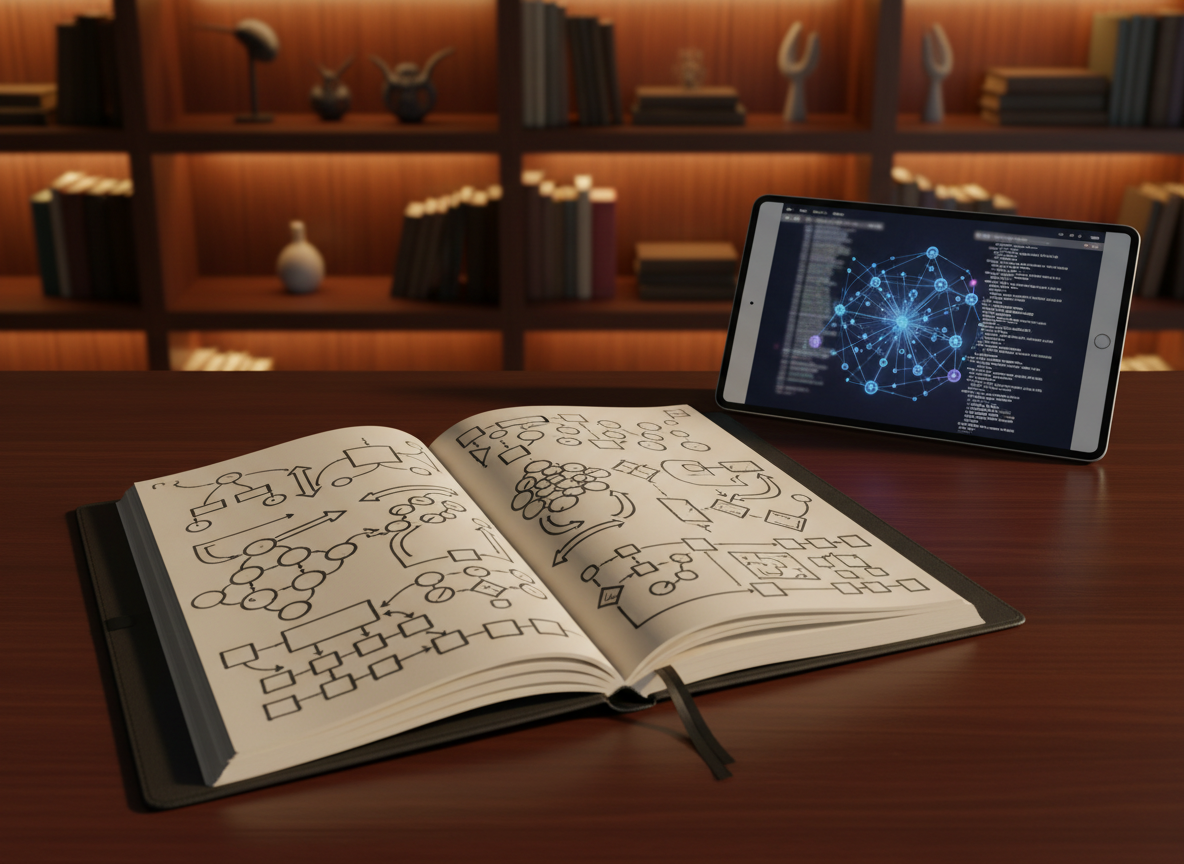
An elegant, matte-black notebook open on a wooden desk, its pages filled with carefully drawn flowcharts, abstract callgraph diagrams, and symbolic arrows representing control flow, all non-textual. Beside it, a tablet displays a stylized neural network diagram overlaying a blurred decompiler-style code structure. The environment is a quiet study with dark wood shelves and softly glowing ambient light strips along the walls. Warm, indirect evening lighting casts gentle shadows and a golden sheen on the paper edges. Photographic realism, shot from a three-quarter overhead angle with moderate depth of field, creates a contemplative, sophisticated mood, illustrating the blend of traditional reverse engineering analysis and modern LLM-assisted reasoning for long-form writing and research.
A close-up of a polished black PCB resting on a clean white desk, with a transparent acrylic overlay etched with abstract patterns hinting at neural network connections merging into traces and vias. In the background, slightly blurred, a monitor shows a high-level visualization of data flow analysis without any readable text. Cool, directional studio lighting from the left creates crisp highlights on the copper traces and subtle reflections in the acrylic. The mood is analytical and precise, with a modern, high-tech aesthetic. Photographic realism, captured from a slightly elevated macro angle, emphasizes fine textures and details, framing the board along the rule of thirds to suggest the meeting of hardware reverse engineering and LLM-powered insight.
An elegant, matte-black notebook open on a wooden desk, its pages filled with carefully drawn flowcharts, abstract callgraph diagrams, and symbolic arrows representing control flow, all non-textual. Beside it, a tablet displays a stylized neural network diagram overlaying a blurred decompiler-style code structure. The environment is a quiet study with dark wood shelves and softly glowing ambient light strips along the walls. Warm, indirect evening lighting casts gentle shadows and a golden sheen on the paper edges. Photographic realism, shot from a three-quarter overhead angle with moderate depth of field, creates a contemplative, sophisticated mood, illustrating the blend of traditional reverse engineering analysis and modern LLM-assisted reasoning for long-form writing and research.

Share feedback

Send a short note if something here resonated, confused you, or suggested a direction you’d like explored next.

← Back

Thank you for your response. ✨